The Bears Played Two States. Now Illinois Is Bidding Again.
Indiana wrote a stadium law in six weeks, Illinois is now trying to match it, and history shows the home state can win or lose that race.

Five months after the Chicago Bears' board voted to pursue a new stadium in Hammond, Indiana, Illinois is back at the table. On Oct. 29, Crain's Chicago Business reported that the team is close to a deal to stay in the state, most likely on land it already owns in Arlington Heights, with a legislative vote possible as soon as November. No agreement has been announced, and the Bears have not publicly backed off Indiana.
How Illinois got back to the table is the real story. For three years, the state's leaders told the Bears no. Then a neighboring state passed a law, and the conversation changed.
Three years of no
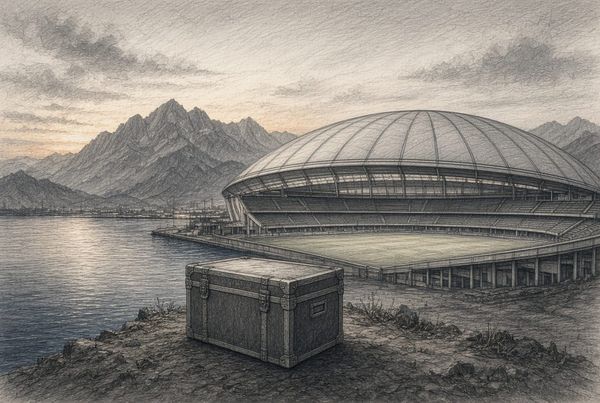
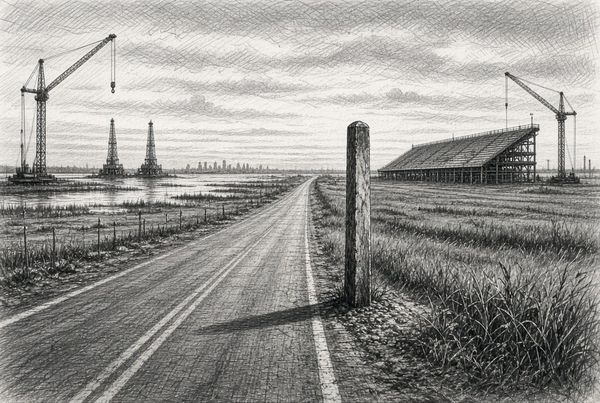
The Bears closed on the 326-acre former Arlington International Racecourse in February 2023, paying $197.2 million. In September 2025 the team named its price for an Arlington Heights stadium. It would spend about $2 billion to build the stadium itself and asked for $855 million in public money for roads, sewers and commuter rail around it. Lawmakers left the fall 2025 veto session without taking it up.
On Dec. 17, 2025, team president Kevin Warren wrote an open letter to fans saying the search would expand to "the wider Chicagoland region, including Northwest Indiana." He said legislative leaders had told him the project "will not be a priority in 2026." He also wrote: "This is not about leverage."
Indiana moves fast
Indiana didn't wait. Senate Bill 27 passed the Indiana House 95-4 and the Senate 45-4, and Gov. Mike Braun signed it the same day as the Senate vote, Feb. 26, 2026. The law creates the Northwest Indiana Stadium Authority, which can buy land, issue 40-year bonds and own a stadium in Hammond while the team keeps the revenue from running it. The money comes from a 1% food-and-beverage tax in Lake and Porter counties, a Lake County hotel tax, a 12% ticket tax and tax revenue captured within the stadium area. Indiana House Speaker Todd Huston said public support could reach $1 billion.
The key feature was ownership. A publicly owned stadium pays no property tax, and property tax had been the Bears' sticking point in Illinois. "We would not be able to build a stadium without tax certainty," Warren said on April 1. "Fortunately we do have tax certainty in the state of Indiana."
Illinois answers, late
Illinois' answer came at the end of its spring session. A "megaprojects" bill that would have let the Bears negotiate payments in place of property taxes passed the House but died in the Senate. With hours left, Sen. Bill Cunningham introduced a new bill letting Cook County cities of more than 70,000 people create their own stadium authorities. Cunningham acknowledged it was "the exact same mechanic set up in Northwest Indiana." The Senate passed it 37-17 at 3:39 a.m. on June 1. The House adjourned less than an hour later without voting on it.
Four days later, the Bears announced that their board had voted "to advance our stadium development project in Hammond, Indiana, with the exact site to be selected." It was the first time the board had voted on any site. On Aug. 13, Warren and chairman George McCaskey called Hammond the team's sole focus, and McCaskey compared the move to the Kansas City Chiefs' move from Missouri to Kansas.
Illinois kept talking anyway. On Oct. 1, NFL Commissioner Roger Goodell and Bears minority owner Pat Ryan met in Chicago with Gov. JB Pritzker and legislative leaders. The league's statement afterward said, "Timely action is essential." Pritzker told Capitol News Illinois that the fall veto session is when action "should happen."
According to Crain's, the framework now under discussion is a version of Cunningham's bill. A city such as Arlington Heights or Chicago could form an authority that owns the stadium, so the stadium would pay no property tax. The Bears would pay to build it, and state money would go to roads and other infrastructure, not the stadium itself. Crain's also reported that Ryan's involvement had driven the recent progress, with Warren and McCaskey taking a back seat.
Leverage, or a real move?
The Bears have never said they used Indiana as leverage, and Warren denied it in writing. Others read it differently. After the Crain's report, Pro Football Talk's Mike Florio wrote that "the bluff has worked." In Hammond, Mayor Thomas McDermott Jr. told a business group on Oct. 30 that the situation is "changing every second."
The sequence itself is not in dispute. Illinois went from offering nothing in 2025, to a Senate-passed bill built on Indiana's design in 2026, to talks the NFL commissioner joined in person.
The precedent
Two earlier border fights show how this kind of contest can end.
In November 1998, New England Patriots owner Robert Kraft reached a tentative deal with Connecticut Gov. John Rowland to move the team to a new $374 million stadium on the Hartford riverfront, built by the state. The formal agreement, signed in February 1999, let the team walk away if the stadium wasn't ready by 2002. On April 30, 1999, Kraft walked away. Massachusetts had come back with a different offer: about $70 million for infrastructure around a new stadium in Foxborough, with Kraft paying for the stadium himself. That stadium, now Gillette Stadium, opened in 2002. The home state kept its team without paying for the building.
Missouri faced the same kind of choice, and it went the other way. In 2024, Kansas changed its law to allow STAR bonds, repaid from sales tax, lottery and sports betting revenue, to cover up to 70% of a new stadium. Missouri responded with a special session in June 2025 that authorized bonds for up to half the cost of new or renovated stadiums, plus up to $50 million in tax credits for each. On Dec. 22, 2025, the Chiefs announced they would build a domed stadium in Kansas City, Kansas, with about $2.4 billion in Kansas bonds covering roughly 60% of the stadium's cost. It is scheduled to open in 2031.
Illinois' reported framework looks like the Massachusetts deal: infrastructure money and no public money for the stadium itself. Indiana's looks like the Kansas deal: bonds backed by new and captured taxes, with the public owning the building.
What comes next
Illinois lawmakers return to Springfield for the veto session on Nov. 17-19 and Dec. 1-3, two weeks after the Nov. 3 election. A stadium bill would have to pass both chambers and be signed by the governor. In Indiana the law is already on the books, and the Bears have not announced a final Hammond site.
Whatever Springfield offers will be measured against one that Indiana has already written into law.
Thanks for reading The Precedent. If you enjoyed this issue, share it with someone who would too.
Written by
What's Next?